
The Guilt Hangover - A field guide for professional people-pleasers
The Guilt Hangover - A field guide for professional people-pleasers
Couldn't load pickup availability
Share
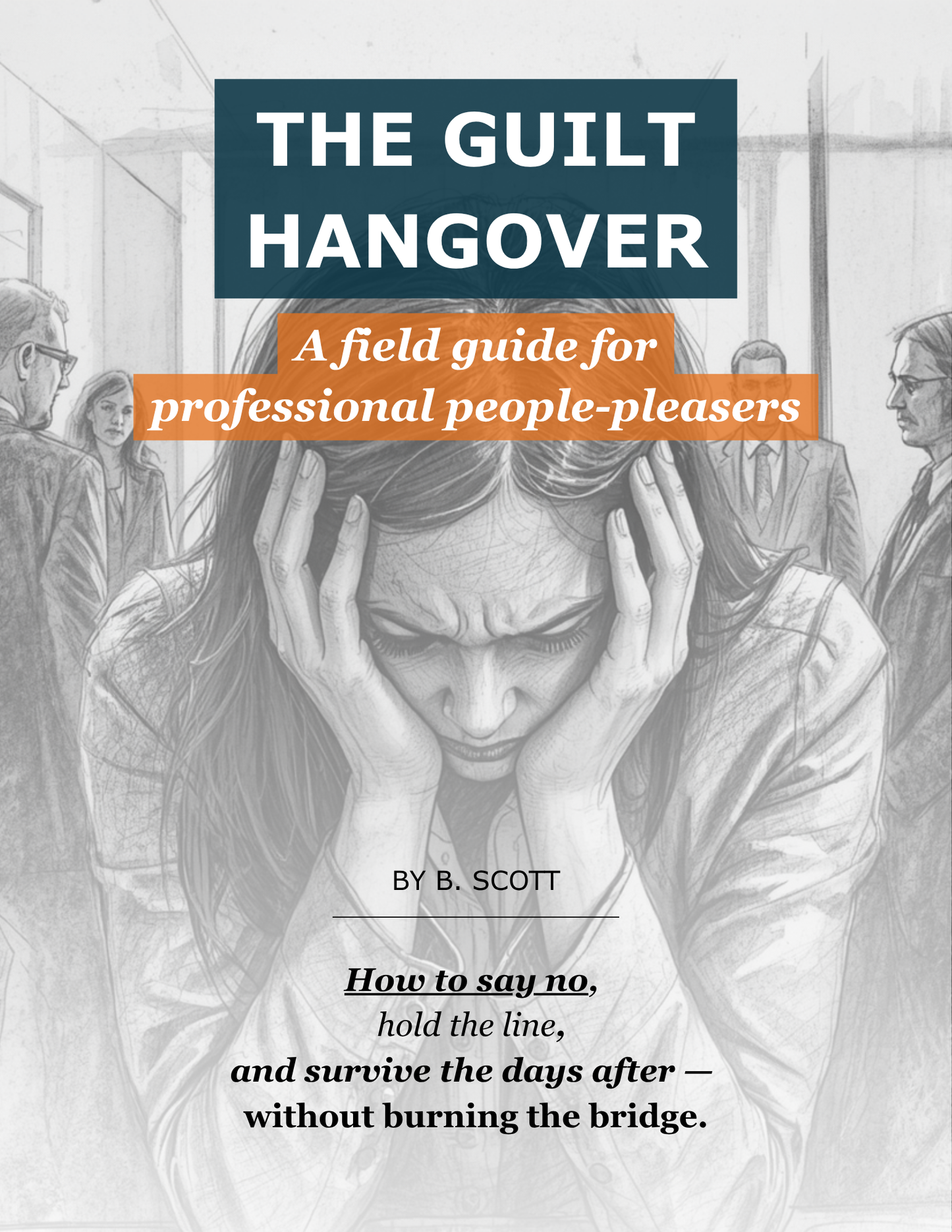
The Guilt Hangover
You finally said no. The relief lasted about four hours. Then the chest-tightness came back, the 3 a.m. replay started, and your brain began rehearsing arguments with people you'll probably never even run into.
This is the part few people write about — not the moment of saying no, but the 24 to 72 hours after, when your guilt tries to undo what you just did.
This guide is a no-fluff field manual for the professional people-pleaser. Written from real career experience — three industries, one failed business, one burned bridge I still wince about — not therapist-speak, not generic boundary advice, not another Instagram carousel from a motivational page.
If you've ever lost a Sunday night to a Monday morning conversation you haven't had yet, this is for you.
What You'll Get
- A 4-step decision framework — Anchor → Fallout → Evidence → Decision. The exact process I now run before saying yes or no to anything that matters.
- The Anchor concept — why every people-pleaser trap is built around something genuinely good, and why ignoring that is the reason most boundary advice fails you.
- The fourth zone — the move most workplace boundary guides miss: how to renegotiate access without detonating the relationship.
- Go-to scripts that actually sound like a human — not clever lines you'll never say, but the unglamorous sentences I've used for years to buy myself time and hold ground.
- The 72-hour survival rules — what to do, and specifically what not to do, in the days after you finally hold the line.
- A one-page cheat sheet — the whole guide distilled into something you can pin up, screenshot, or send to a friend who needs it.
Who This Is For
- The employee who drafts the same email for an hour before sending it.
- The freelancer who can't say no to scope creep without spiraling for a week.
- The new manager who got promoted for being "easy to work with" and now can't stop being easy to walk over.
- The founder propping up a project out of loyalty to who they were when they started it.
- Anyone who lies awake at night replaying decisions they've already made.
Who This Isn't For
This isn't a therapy substitute. If you're in a genuinely abusive situation — at work or anywhere else — you need a professional, not a PDF. This guide is honest about that.
What Makes This Different
Most boundary content is written by therapists writing to a vague audience about feelings. This is written by someone who lost real money, real years, and a real job to the exact problem you're trying to solve — and who'll tell you plainly what worked and what didn't.
Read it in one sitting. Start using it tomorrow.